


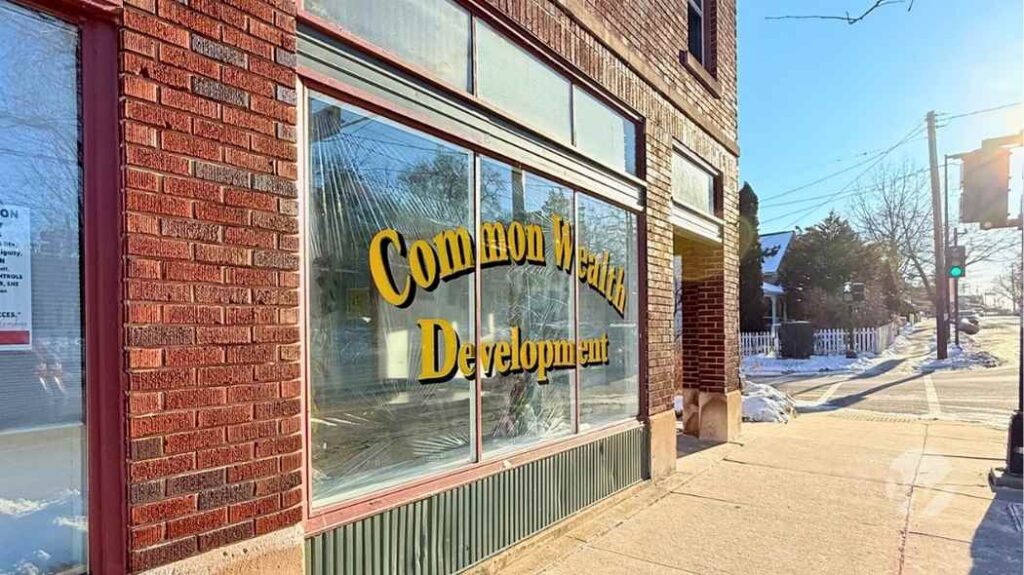
How Affordable Housing Can Build Stronger, Safer Neighborhoods
Nonprofits across Wisconsin are finding creative, community-centered ways to respond to complex challenges. Wegner CPAs’ Nonprofit Spotlight series highlights organizations developing innovative approaches and strengthening resilience, offering lessons that others in the sector can apply.
For this installment, we spoke with Dr. Justice Castañeda, Executive Director, and Stefan Davidson, Finance Director, at Common Wealth Development (CWD). CWD is a Madison-based nonprofit whose work demonstrates how affordable housing can serve as the foundation for healthier, more connected neighborhoods.
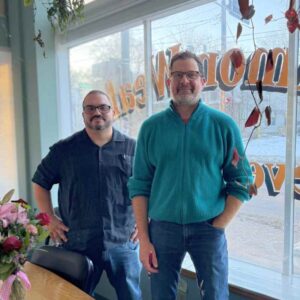
Affordable Housing as a Platform for Community Health
Common Wealth Development’s mission is rooted in a simple but powerful idea: strong neighborhoods are the foundation of strong, safe communities.
Since its founding in 1979, Common Wealth Development has been a pioneer in innovative housing models across Madison. Today, the organization manages more than 170 housing units, serving hundreds of residents with below-market rent options that prioritize stability and dignity.
“Our work is really about the viability of neighborhoods in the Madison metropolitan area,” Castañeda shared. “It’s an upstream approach to violence prevention.”
Rather than focusing only on crisis response, CWD invests in the conditions that help communities thrive in the first place: safe, stable, and affordable housing, economic opportunity, and spaces where neighbors can build connection. Stable housing reduces disruption, strengthens neighborhoods, and creates the conditions for long-term health and safety. It also enables CWD to expand into programs that support youth, workforce development, and economic mobility.
One example is CWD’s Youth Advisory Board, which provides Madison high school students with paid opportunities to explore civic issues, collaborate across schools, and propose solutions directly to policymakers. Participants select topics that matter to them, ranging from violence prevention to immigration to community safety. They then spend the year developing real deliverables for city leaders.
“It gives them an opportunity to analyze and assess the neighborhoods and the places that they’re in,” Castañeda said. “It’s experiential learning rooted in civic engagement.”
For nonprofit leaders, it’s a reminder that community development is most effective when it is holistic. That means investing not only in housing, but also in the people and systems that allow neighborhoods to thrive.
A Unique, Resilient Model Built on Community Assets
One of the most distinctive aspects of Common Wealth Development is its structure. While many nonprofits rely primarily on external funding streams, CWD has built a model that generates significant revenue through the very assets it develops.
“You look at our balance sheet, we look like a real estate holding company,” Davidson noted, “which is essentially what we are.”
Over decades, CWD acquired land and buildings in the neighborhoods it serves, using early community support, local partnerships, and long-term vision to create a portfolio of affordable rental housing and business space. That asset-based approach has provided a level of resilience for CWD and its programming, especially during a time when nonprofits across the country are facing rising costs, uncertainty in government funding, and increased demand for services.
“We were very fortunate,” Davidson shared, “that this organization was built with assets in mind and not just programming… They invested in the physical assets of the community.”
That model doesn’t eliminate challenges. Insurance, utilities, and operational costs continue to rise, but it does create a stable base that allows CWD to plan, adapt, and weather economic shifts more effectively than many organizations can.
For finance professionals in the nonprofit sector, CWD offers a compelling example of how capital strategy and mission can co-exist.
Creating Economic Opportunity Beyond Housing
Common Wealth’s impact extends beyond residential housing into local economic development through its long-running business incubator program.
Designed to reduce barriers for low- and moderate-income entrepreneurs, particularly women, LGBTQ+ founders, and Black and brown business owners, the incubators provide affordable space and support for small businesses to launch and grow.
“It’s oriented toward aspiring business owners,” Castañeda said, “and there’s nothing like meeting someone who is pitching their dream.”
The incubators have helped seed a wide range of Madison-based ventures, from food producers to manufacturers, contributing to neighborhood vitality in ways that ripple far beyond the individual businesses themselves. It’s another example of CWD’s neighborhood-first approach: strengthening local economies by supporting residents not just as tenants, but as creators and leaders.
Measuring Upstream Impact
Because Common Wealth’s work is rooted in long-term community change, impact measurement requires more than a single metric.
“There’s not one measure that tells the whole story,” Castañeda explained. Instead, CWD evaluates success across programs through housing stability, participation, business sustainability, and youth outcomes—building accountability into each layer of its work.
Davidson added that upstream approaches require both patience and perspective, particularly when direct, one-to-one measurement isn’t possible.
“You can’t do a one-to-one,” he said. “We’re trying to create the environment that results in lower violence.”
That reality also shapes how the organization approaches evaluation. Rather than attempting to replicate large-scale research internally, CWD looks to established studies and proven frameworks to guide its work.
“Other people have looked at this… they’ve done a lot of research on it… and they say these are the ways to do it,” Davidson shared. “All right, well, let’s trust that that’s the way.”
For nonprofit leaders, this highlights an important balance: pairing thoughtful, program-level metrics with a willingness to rely on external research when measuring complex, long-term outcomes. In many cases, impact is best understood not through a single data point, but through consistent signals across programs, participation, and community engagement over time.
CWD’s Closing Advice for Nonprofit Leaders
As the conversation closed, we asked both Castaneda and Davidson to share a piece of advice for nonprofit leaders navigating a challenging environment.
Castañeda emphasized the importance of collective work:
“Patience is necessary. And you need each other,” he said. “It’s easy to feel isolated… but we need to lean into it.”
Davidson highlighted perspective and relationships, especially in difficult financial environments:
“Trying to view it from other people’s perspective can help you find solutions,” he shared. “Most folks are trying to achieve the same goals.”
Together, their advice reflects the heart of Common Wealth Development’s work: community is built through connection, long-term investment, and shared commitment.
At the same time, their model offers a broader lesson for the nonprofit sector. By investing in physical assets and generating revenue through affordable housing, Common Wealth Development demonstrates how nonprofits can explore nontraditional approaches to funding: creating impact while building a stronger foundation for long-term financial resilience.
Learn more about Common Wealth Development by visiting their website.
Stay tuned for future Nonprofit Spotlights highlighting nonprofits across Wisconsin who are driving change through creativity, innovation, and community-rooted solutions.